Why the mathematical beauty we find in the cosmos is an objective “fact” which points to a Designer
| September 7, 2011 | Posted by vjtorley under Intelligent Design |
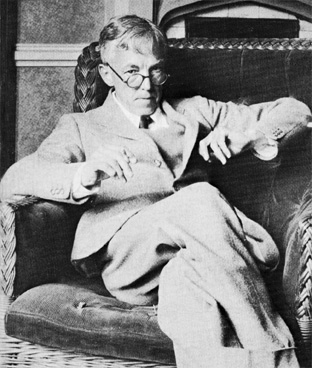
I have written this essay in response to a skeptical critic of Intelligent Design, who denies that the cosmos is beautiful in any objective sense. My aim is to defend two propositions: (i) mathematical beauty is an objective reality; and (ii) the cosmos instantiates this kind of beauty, and can therefore be called objectively beautiful. I will then endeavor to show that Intelligent Design is the only hypothesis which satisfactorily explains these truths. In my essay, I shall be quoting liberally from the writings of a number of atheist mathematicians and physicists, some of whom are pictured above: Bertrand Russell, G.H. Hardy, Paul Erdos and Steven Weinberg (with acknowledgements to photographer Larry D. Moore for the image of Professor Weinberg).
|
|

The background to this dispute
Recently, in response to a query by an Uncommon Descent contributor named rhampton7, I argued that “the fact that the laws of Nature display a deep underlying beauty and “hang together” very well (as I explained in my post, Beauty and the Multiverse), points to a single Intelligent Designer of the cosmos,” and I added: “I think that this would be a sensible default hypothesis for ID to adopt.”
An anonymous critic of Intelligent Design did not agree with what I wrote, and forthrightly asserted:
Beauty is not a “fact”. “Hang together” is meaningless. The two put together don’t point to squat. There’s nothing sensible in ID and never will be.
There are many different kinds of beauty, and some (e.g. physical attractiveness and artistic beauty) are influenced by individual likes and dislikes, as well as by cultural preferences. For these kinds of beauty, a case could be made that “Beauty is in the eye of the beholder” – a subjective evaluation rather than an objective fact.
Mathematical beauty, however, is altogether different. In this realm, we find no trace of the subjective. As I am not a mathematician or a scientist, I thought it best to make my point by quoting from the works of mathematicians and physicists. The vast majority of quotes given below are taken from scientists who were atheists or who had no religious beliefs. (The bold emphases are mine.) Nevertheless, as I shall argue in the final part of my essay, they help to establish a powerful case for an Intelligent Mind behind the natural world, which is responsible for the mathematical beauty we observe in the cosmos.
What is mathematical beauty?
The British philosopher, mathematician and outspoken atheist Bertrand Russell (1872-1970) expressed a firm belief in the reality of objective mathematical beauty in his essay, The Study of Mathematics (1902):
Mathematics, rightly viewed, possesses not only truth, but supreme beauty — a beauty cold and austere, like that of sculpture, without appeal to any part of our weaker nature, without the gorgeous trappings of painting or music, yet sublimely pure, and capable of a stern perfection such as only the greatest art can show. The true spirit of delight, the exaltation, the sense of being more than Man, which is the touchstone of the highest excellence, is to be found in mathematics as surely as poetry…
Philosophers have commonly held that the laws of logic, which underlie mathematics, are laws of thought, laws regulating the operations of our minds. By this opinion the true dignity of reason is very greatly lowered: it ceases to be an investigation into the very heart and immutable essence of all things actual and possible, becoming, instead, an inquiry into something more or less human and subject to our limitations. The contemplation of what is non-human, the discovery that our minds are capable of dealing with material not created by them, above all, the realisation that beauty belongs to the outer world as to the inner, are the chief means of overcoming the terrible sense of impotence, of weakness, of exile amid hostile powers, which is too apt to result from acknowledging the all-but omnipotence of alien forces…. It is only when we thoroughly understand the entire independence of ourselves, which belongs to this world that reason finds, that we can adequately realise the profound importance of its beauty.
A 1940 essay by the British mathematician and atheist Godfrey Harold (“G. H.”) Hardy (1877 – 1947), entitled, A Mathematician’s Apology (Cambridge University Press, 1994; available in the public domain in Canada, courtesy of the University of Alberta Mathematical Science Society) defends the objective reality of mathematical beauty, which can be defined in terms of the harmony of its underlying ideas. Hardy likens the beauty of mathematics to that of a beautiful poem:
The mathematician’s patterns, like the painter’s or the poet’s must be beautiful; the ideas, like the colors or the words must fit together in a harmonious way. Beauty is the first test: there is no permanent place in this world for ugly mathematics….
It would be quite difficult now to find an educated man quite insensitive to the aesthetic appeal of mathematics. It may be very hard to define mathematical beauty, but that is just as true of beauty of any kind – we may not know quite what we mean by a beautiful poem, but that does not prevent us from recognizing one when we read it.
There are masses of chess-players in every civilized country – in Russia, almost the whole educated population; and every chess-player can recognize and appreciate a ‘beautiful’ game or problem. Yet a chess problem is simply an exercise in pure mathematics (a game not entirely, since psychology also plays a part), and everyone who calls a problem ‘beautiful’ is applauding mathematical beauty, even if it is a beauty of a comparatively lowly kind. Chess problems are the hymn-tunes of mathematics…
I might add that there is nothing in the world which pleases even famous men (and men who have used quite disparaging words about mathematics) quite so much as to discover, or rediscover, a genuine mathematical theorem. (Section 10).
The German historian and philosopher Oswald Spengler (1880-1936), who had a strong interest in mathematics and the sciences, approvingly cited an aphorism of Goethe on the beauty of mathematics in his essay, “Meaning of Numbers” (in James R. Newman, The World of Mathematics, Vol. 4, p. 2320, Simon & Schuster, 1956):
To Goethe again we owe the profound saying: “the mathematician is only complete in so far as he feels within himself the beauty of the true.”
More recently, the Hungarian mathematician Paul Erdos (1913-1996) expressed his views on the ineffable beauty of mathematics when he remarked, “Why are numbers beautiful? It’s like asking why is Beethoven’s Ninth Symphony beautiful. If you don’t see why, someone can’t tell you. I know numbers are beautiful. If they aren’t beautiful, nothing is.” (Gina Kolata, “Paul Erdos, a Math Wayfarer at Field’s Pinnacle, Dies at 83.” The New York Times, Sept. 24, 1996.)
Although he was an atheist, Erdos spoke of an imaginary book, in which God has written down all the most beautiful mathematical proofs. When Erdos wanted to express particular appreciation of a proof, he would exclaim “This one’s from The Book!” (Philosophy of Mathematics by John Francis, Global Vision Publishing House, Delhi, 2008, p. 51.)
Finally, Jacob Bronowski (1908-1974), a mathematician, biologist, atheist and the writer of the 1973 BBC series , The Ascent of Man, wrote about the poetic beauty of pure mathematics in his book, Science and Human Values (Pelican, 1964):
Mathematics is in the first place a language in which we discuss those parts of the real world which can be described by numbers or by similar relations of order. But with the workaday business of translating the facts into this language there naturally goes, in those who are good at it, a pleasure in the activity itself. They find the language richer than its bare content; what is translated comes to mean less to them than the logic and the style of saying it; and from these overtones grows mathematics as a literature in its own right. Mathematics in this sense, pure mathematics, is a form of poetry, which has the same relation to the prose of practical mathematics as poetry has to prose in any other language. The element of poetry, the delight of exploring the medium for its own sake, is an essential ingredient in the creative process.
The foregoing quotations by leading mathematicians point to the conclusion that pure mathematics has an intellectual beauty of its own, which is utterly independent of human beings. The beauty of pure mathematics is indeed a “fact” – to use the terminology of my skeptical critic.
The beauty that scientists discover in Nature is a physical instantiation of the beauty that we encounter in mathematics
The French mathematician and philosopher of science, Jules Henri Poincare (1854-1912), described the beauty of science in his work, Science and method(1908), as translated by Francis Maitland (1914), and recently reprinted by Cosimo Classics, New York. Poincare, who as far as I can tell had no religious beliefs, wrote:
The scientist does not study nature because it is useful to do so. He studies it because he takes pleasure in it, and he takes pleasure in it because it is beautiful. If nature were not beautiful it would not be worth knowing, and life would not be worth living. I am not speaking, of course, of the beauty which strikes the senses, of the beauty of qualities and appearances. I am far from despising this, but it has nothing to do with science. What I mean is that more intimate beauty which comes from the harmonious order of its parts, and which a pure intelligence can grasp… Intellectual beauty … is self-sufficing, and it is for it, more perhaps than for the good of humanity, that the scientist condemns himself to long and pitiful labours…
It is because simplicity and vastness are both beautiful that we seek by preference simple facts and vast facts; that we take delight, now in following the giant courses of the stars, now in scrutinizing with a microscope that microscopic smallness which is also a vastness, and now in seeking in geological ages the traces of a past that attracts us because of its remoteness. (Part I, Chapter 1: The Selection of Facts, pp. 22-23.)
In a similar vein, the theoretical physicist Freeman Dyson wrote an obituary of the 20-century mathematician Herman Weyl (1885-1955), in Nature, March 10, 1956, in which he relates the following conversation with the great mathematician, who was a former colleague of his at the Institute for Advanced Study:
Characteristic of Weyl was an aesthetic sense which dominated his thinking on all subjects. He once said to me, half-joking, “My work always tried to unite the true with the beautiful; but when I had to choose one or the other, I usually chose the beautiful.” This remark sums up his personality perfectly. It shows his profound faith in an ultimate harmony of nature, in which laws should inevitably express themselves in a mathematically beautiful form. It also shows his recognition of human frailty, and his humour, which always stopped him short of being pompous.
(Weyl’s Spinozan philosophical views are discussed here by Peter Pesic.)
Most strikingly of all, the Nobel Prize winner, theoretical physicist and atheist Steve Weinberg recently expressed his thoughts on the importance of mathematical beauty when adjudicating between theories in physics, in an interview with the PBS series NOVA for the 2003 Emmy award-winning TV program, The Elegant Universe:
NOVA: Do you think that string theory could turn out to be just plain wrong?
Weinberg: I don’t think it’s ever happened that a theory that has the kind of mathematical appeal that string theory has, has turned out to be entirely wrong. There have been theories that turned out to be right in a different context than the context for which they were invented. But I would find it hard to believe that that much elegance and mathematical beauty would simply be wasted. And in any case I don’t see any alternative to string theory. I don’t see any other way of bringing gravity into the same general theoretical framework as all the other forces of nature. Yes, it could be entirely wrong. I don’t think it’s likely at all. I think it’s best to assume it’s not and take it very seriously and work on it.
NOVA: What is beauty to a theoretical physicist?
Weinberg: It may seem wacky that a physicist looking at a theory says, “That’s a beautiful theory,” and therefore takes it seriously as a possible theory of nature. What does beauty have to do with it? I like to make an analogy with a horse breeder who looks at a horse and says, “That’s a beautiful horse.” While he or she may be expressing a purely aesthetic emotion, I think there’s more to it than that. The horse breeder has seen lots of horses and from experience with horses knows that that’s the kind of horse that wins races.
So it’s an aesthetic sense that’s been beaten into us by centuries of interaction with nature. We’ve learned that certain kinds of theories—the kind that win races—actually succeed in accounting for natural phenomena. The kind of beauty we look for is a kind of rigidity, a sense that the theory is the way it is because if you change anything in it, it would make no sense.
String theories in particular have gotten much more rigid as time has passed, which is good. You don’t want a theory that accounts for any conceivable set of data; you want a theory that predicts that the data must be just so, because then you will have explained why the world is the way it is. That’s a kind of beauty that you also see in works of art, perhaps in a sonata of Chopin, for example. You have the sense that a note has been struck wrong even if you’ve never heard the piece before. The kind of beauty that we search for in physics really does work as a guide, and it is a large part of what attracts people to string theory. And I’m betting that they’re right.
Well, this is surprising! Not only is mathematical beauty wholly independent of us, but it appears to be “out there” in the cosmos too. What’s more, the intellectual beauty of a scientific theory is a good scientific guide to whether or not it is actually true, in the real world. In the words of Nobel Prize-winning physicist Steven Weinberg, “The kind of beauty that we search for in physics really does work as a guide.”
The kind of beauty that characterizes a good scientific theory can be described in terms of its underlying simplicity and the “harmonious order of its parts” as Poincare described it – which is what I meant when I wrote that the laws of Nature “hang together” very well. Weinberg goes even further: for him, a good scientific theory is one which hangs together so well that if even a single part is changed, the whole edifice comes crashing down. He argues that string theory is just such a theory.
How do we account for all this?
Dr. Robin Collins, who is a noted proponent of the cosmological fine-tuning argument, has argued in a lecture he gave at Stanford University entitled, Universe or Multiverse? A Theistic Perspective. that theism is the only satisfactory way of accounting for the surprising degree of beauty that we see in the underlying principles of physics:
Further, this “fine-tuning” for simplicity and elegance cannot be explained either by the universe-generator multiverse hypothesis or the metaphysical multiverse hypothesis, since there is no reason to think that intelligent life could only arise in a universe with simple, elegant underlying physical principles. Certainly a somewhat orderly macroscopic world is necessary for intelligent life, but there is no reason to think this requires a simple and elegant underlying set of physical principles.
One way of putting the argument is in terms of the “surprise principle” we invoked in the argument for the fine-tuning of the constants of intelligent life. Specifically, as applied to this case, one could argue that the fact that the phenomena and laws of physics are fine-tuned for simplicity with variety is highly surprising under the non-design hypothesis, but not highly surprising under theism. Thus, the existence of such fine-tuned laws provides significant evidence for theism over the non-design hypothesis. Another way one could explicate this argument is as follows. Atheism seems to offer no explanation for the apparent fine-tuning of the laws of nature for beauty and elegance (or simplicity with variety). Theism, on the other hand, seems to offer such a natural explanation: for example, given the classical theistic conception of God as the greatest possible being, and hence a being with a perfect aesthetic sensibility, it is not surprising that such a God would create a world of great subtlety and beauty at the fundamental level. Given the rule of inference that, everything else being equal, a natural non-ad hoc explanation of a phenomenon x is always better than no explanation at all, it follows that everything else being equal, we should prefer the theistic explanation to the claim that the elegance and beauty of the laws of nature is just a brute fact.
So in response to my critic: yes, I really do believe that the mathematical beauty of the laws of nature offers eloquent testimony to the existence of a Mind Who designed Nature. If you’ve got a better explanation, then I’d love to hear it.
My critic may retort that the evil we see in this world makes any talk of the beauty of Nature ring hollow. I have to say that my intellectual intuitions are precisely the opposite. The beauty we find in physics extends to every nook and cranny of the cosmos: wherever the laws of Nature hold, there is beauty. The evil we find in the cosmos is confined to one planet: Earth. What’s more, it’s confined to sentient beings, which make up a tiny fraction of the millions of species which inhabit our Earth. Evil is local, while beauty is universal. Which fact should we pay more attention to? I’ll let my readers decide.
28 Responses to Why the mathematical beauty we find in the cosmos is an objective “fact” which points to a Designer
Leave a Reply
You must be logged in to post a comment.
And, Chris, equally, it has been “pointed out” to you that it is simply not the case that “the best policy for any atheist is to free-ride on society”, and that, on the contrary, simply replacing human vigilance with an all-seeing God does nothing for morality per se, though it might (although there’s not a lot of evidence to support it) do something for compliance with an ethical code.
There are plenty of incentives for atheists to act morally, not least being social disapproval and punishment, but for more importantly being the fact that behaving well to our fellow creatures tends to make us happier (I can even cite you studies if you like).
Your “fact” has been “refuted”, with examples, many times, as far as I can see.
Clearly you disagree, but you might at least do your interlocutors the honour of granting that they might actually disagree with you, rather than that they simply refuse to “see the truth” because of “some personal emotional reason not susceptible to things like evidence, reason, and logic”. You have been provided with plenty of all three!
As Scott Andrews has argued, very eloquently: both atheists and theists are capable of behaving badly, and, indeed, of justifying their behaviour in terms of their stance vis a vis god or gods. Equally, both atheists and theist are capable of behaving magnanimously, generously, and even self-sacrificially. How are we to explain this if theism is the only foundation for ethical principles and moral behaviour?
It seems to me quite easy to explain: that we are an extraordinary species capable of making long terms decisions that place weight on both our own long-term welfare and those of others. This means that we are capable of what we call “moral” decisions – of decisions that can either tend to place higher value our own welfare than that of others, or those that tend to value the welfare of others as equal, or even greater, our own. Not only that, but we are capable of elevating those capacities into an abstract system of values that we call ethics, and of constructing systems of rules and laws that govern the conduct of all members of our communities, on pain of rejection by the community, in order to ensure that everyone benefits, rather than a few “free-loaders”; not only that, but we are capable of enshringing those rules and laws as part of our child-rearing culture, so that our children have a chance of learning the wonderful lesson that it really is, on the whole, more fun to give than to receive, and more rewarding to do a job that gives others pleasure, or relieves distress, than it is to do a job that exploits others and leaves us with the transient pleasures that leisure and money can provide.
Obviously it often doesn’t work that way, but that’s no fault of atheism, nor even due to lack of theism, but, I’d argue, a symptom of our inexperience as a population. We are learning, I think, and hope.
I don’t know how this happens! Sorry, wrong thread again.
vjtorley, what do you mean by “objectively beautiful” as opposed to simply “beautiful”?
(and feel free to delete my misposted comments above if you have the facility to do so!)
Hmm… you didn’t really answer address the points I made. The “default” position of ID, as you describe, is an a priori argurment.
A designer of the Cosmos need not be the designer of DNA – neither of which needs to be a singular intelligent source. In fact, using what we do know of intelligent agents, the more complicated and intertwined a design is, the more likely multiple designers (and constructors) were involved.
Furthermore, if we allow the Creationist argument against modern Scientific findings to be accepted (that the universe and its laws past need not have behaved as we observe today), then your argument about mathematical beauty is negatively affected. There is no way to know if the universe was “beautiful” before our ability to observe it. Unless, of course, you allow an a priori argument that we can know the past from what we measure today – in which case you have opened the door to arguments in support of Darwinian evolution.
And in fact, that’s what Stephen Meyer puts forth in The Scientific Status of Intelligent Design:
That “anonymous critic” actually has a blog, from which you were quoting. I do think it would have been appropriate for you to provide the link.
Yes, it is – for some meanings of “objective”. I could not find where you gave your meaning of “objective”, so I don’t see you as actually defending that proposition.
As I drive to work, I pass a vineyard, with the grapevines arranged neatly in rows. We could perhaps call that an instantiation of mathematical beauty, though it is a man-made instantiation. A half mile further along I see a natural environment, but there is nothing evidently mathematical there. Perhaps if I got out of the car, I might find a bee’s honeycomb or a spider’s web with some mathematical structure. And in winter, I might find some snow crystals with mathematical structure. But mostly, when we find mathematical structure in the physical world, it is the work of man.
I don’t think Russell was saying what you appear to be taking him to have said. He also wrote (in that essay):
So Russell is recognizing that mathematics is an ideal, rather than something found in the physical world.
Dr Torley:
Another great effort.
And I am astonished that someone would seriously object to “hang together” as an idiomatic expression for coherence and symmetry, wherein we have elegant order and variety, three key constituents of beauty.
As an example, here is my favourite example of he severe, pellucid beauty of mathematics and its ability to succinctly capture deep and powerful features of reality; of course Euler’s famous identity:
1 + e^i*Pi = 0
How beautiful is this?
Let me count he ways, by way of Wiki as testifying against interest:
Keith Devlin’s April 2007 Column in the Math Assoc of America web is similar:
A video here will add to the point.
All I will add is that if you cannot — or, refuse – see or be moved by the astonishing beauty, elegance and power of this identity expression, then that is a strong sign that you have been endarkened and benumbed in heart and mind.
Something, in the end, more a topic for intercessory prayer and compassion, than for argument.
GEM of TKI
PS: I think the fractal beauty of the Mandelbrot set and the like, also come in for honourable mention. There is a reason why we love the iconic pictures of that set, especially the joys of seahorse valley!
NR:
Why do you insist on strawman caricature, regardless of how often you are corrected? Do you not see that that insistence goes to your sincerity, and not happily so, in the end?
An abductive inference to design as best explanation across competing, empirically testable alternatives on aspects of an object, phenomenon or process, per factual adequacy, coherence and explanatory elegance, is NOT an a prioi imposition. Utterly unlike the self-confessed patent a prioris of the Lewontinian materialism agenda.
And, given that beauty is in the end about a unified whole that exhibits principled order and pattern, in a coherence that unifies variety, that is closely related indeed to the coherence test, as well as the elegance of explanations comparative difficulties test.
That is why, BTW, going for beauty is so often effective in both physics and mathematics, as well as engineering: coherence manifests itself in beauty, and a sound intuition of beauty is therefore is a strong sign that something is fundamentally right.
(Did you know that there is a longstanding rule of thumb among aircraft designers, that the best aircraft designs will usually be beautiful? The old Spitfire is perhaps the classic case in point, that elegant little elliptically winged, fire-spitting maiden of an aircraft.)
In short, there is reason for going for the elegance of unified, balanced simplicity and/or symmetry amidst variety that so often serves as an intuitive guide to the greatest in such fields.
Let that elegantly petite beauty, Sophia, lead you by her hand:
GEM of TKI
NR: Please look at what Russell says, again. Mathematics is abstract, and we can appreciate its beauty, which is independent of our particular contingencies of being. 2 + 3 = 5 is true — necessarily so — in all possible worlds, above and beyond the symbols we use to express it, or test cases we use to illustrate it.
I would like to point out a few things about how mathematics has gone from being, merely, a useful approximation of reality, to being a discipline that accurately predicts how reality actually operates:
,,,Newton’s theory of gravity, though ‘mathematical’, is merely “an extremely useful approximation” of reality since several ‘predictions’ of Newton’s theory of gravity do not match how reality is observed to actually operate;
http://uk.answers.yahoo.com/qu.....706AAyDENb
,,,Whereas in General Relativity, the predictions, flowing from the equation of General Relativity, have been confirmed time and time again to match how reality, at least the ‘space-time’ part of reality, actually behaves. Moreover, the predictions of General Relativity for space-time are verified to an accuracy that, as far as we can tell, exceeds what our best instruments can measure of our space-time reality;
Yet to the consternation of those who were hoping for a complete mathematical ‘theory of everything’ from General Relativity, this was not to be, despite General Relativity’s stunning success in predicting how our space-time reality actually operates;
and here is a more rigorous falsification of the ‘completeness’ of General Relativity to be a all encompassing ‘theory of everything’;
The ‘incompleteness’ of General Relativity has been made even more stark by Quantum Mechanics. Indeed, to the consternation of those who have grown up rightly impressed by the verified accuracy of General Relativity’s predictive power for space-time, Quantum Mechanics has come along, and seemingly ‘sniffed, with a turned up nose, at the equations’ of the space-time of general relativity, and has resolutely stated, ‘I have no need of that hypothesis’;
It should be noted that the preceding quantum effect is ‘universal’ in scope, instead of merely atomic and sub-atomic in scope.
As well…
and,,,
Yet, despite the noteworthy success of each theory’s unrivaled predictive power, in their respective areas of investigating ‘reality’, the failure of each theory to be successfully unified with the other theory has caused some Physicists to lament ‘the collapse of physics’;
Quantum Mechanics and Relativity – The Collapse Of Physics? – video – with notes as to plausible reconciliation that is missed by materialists
http://www.metacafe.com/watch/6597379/
And BTW, the Meyer quote is a rebuttal to selective hyperskepticism in origins science. If we use the uniformity principle and explain the past on traces in the now, and causal forces seen to be adequate to such outcomes, they point to design. And so the attempt to use this pattern to infer to descent as natural history, then runs into the barrier that it is an arbitrary skepticism that then refuses to recognise design as best explanation of certain key features involved. Wallace saw this as co-fo8under of evolutionary theory.
Hi Elizabeth,
Thank you for your question. You ask: “vjtorley, what do you mean by ‘objectively beautiful’ as opposed to simply ‘beautiful’?”
By ‘beautiful’ I mean: anything from which you can derive pleasure, simply by contemplating it. By ‘subjectively beautiful’ I mean: anything that you derive pleasure from contemplating, for reasons related to your own personal or cultural preferences, or your biological identity as a human being. If something is subjectively beautiful, you would not necessarily expect someone else to like it – especially if they were from a different culture from yours, or a different species (e.g. a dolphin or a Martian). Subjective beauty is, by definition, in the eye of the beholder.
By ‘objectively beautiful’ I mean: anything that you derive pleasure from contemplating, for reasons independent of your own personal or cultural preferences, or your biological identity. If something is objectively beautiful, you would expect someone else to like it, irrespective of their identity, culture or species. I would expect a Martian to appreciate the beauty of Euler’s identity, for instance.
The aim of my essay has been to show that mathematical beauty is objective, and that the cosmos instantiates this kind of beauty. Thus the beauty of the cosmos is not in the eye of the beholder.
I hope that answers your question, Elizabeth.
rhampton7,
Thank you for your post. I’m sorry for not addressing your concerns directly, but I usually respond to one person at a time when defending Intelligent Design, and this post was a response to another skeptic.
By the way, have you read my recent post, What assumptions does the fine-tuning argument make about the Designer? ? I think it will answer a lot of your questions.
Anyway, I’d now like to address your objections. You write:
Not so. A default position is just that – a default position. It’s not set in stone; it’s revisable in the light of new data.
As to why I think a single Cosmic Designer is a good default position, consider the following data: (i) the laws of Nature appear to be the same at all places and times; (ii) the laws of Nature rest on an underlying mathematical theory which is mathematically elegant and very simple. All of this points to a single Mind as the most likely explanation. Could the universe be the product of a team of minds? From a scientific point of view, we can’t positively exclude that option, but it sounds like an unparsimonious hypothesis.
You also write:
You are quite right to say that the Designer of the cosmos need not be the same as the Designer of DNA. One could posit a Demiurge, as I acknowledged in the post I mentioned above. However, life must have appeared somewhere first, and right now, we don’t know of any other place in the cosmos where it originated, except Earth. Someone must have put it there, and the most parsimonious assumption is that it was the Cosmic Designer.
You think that the complexity of life points to it being the product of teamwork, rather than a single Designer. I’m no scientist, but I would answer that if there are pervasive and aesthetically elegant features of DNA which are found in all (or virtually all) living creatures, a common Designer seems to be the most likely explanation.
Finally, you write:
I’d like to make two observations:
(i) you appear to be taking skepticism to extraordinary lengths by doubting whether the universe was beautiful before we observed it. If the laws of the universe have always been the same since the beginning of the universe, then the universe has always been mathematically elegant. But even if this was not the case, and the universe suddenly became elegant, it’s still reasonable to ask why. In that case, I’d say that an intelligent X came along and replaced the old set of ugly laws with a brand new set of beautiful new ones. That’s still and ID argument;
(ii) you claim that the principle that we can know the past from what we measure today, opens the door to arguments in support of Darwinian evolution. Not so; quite the reverse. What we measure today, from experiments with bacteria, seems to indicate that the pace of Darwinian evolution is slow, that saltations are non-existent, and that evolution can only achieve a limited degree of change. That suggests something more than Neo-Darwinian Evolution might be involved, and that the only kind of evolution that sounds reasonable is guided.
What’s more, contemporary observations lend support to the conclusion that the first life was designed. No non-foresighted process is known to be adequate for producing the level of specified complexity we find in DNA. So much for abiogenesis.
Take care,
Vincent
But how do you differentiate (“objectively”
) between something you appreciate for because of “your own personal or cultural preferences or your biological identity” and something that you appreciate for “independent” reasons?
Yes, “subjective beauty” exists in the eye of the beholder, but how do you know there exists any kind of beauty that doesn’t? You say you would “expect” a Martian to appreciate the beauty of Euler’s identity – why? To a Martian, Euler’s identity might simply be a perfectly obvious truism, as 1+1=2 is for us. Indeed, Euler’s identity is largely beautiful because demonstrates the connections between different, human-devised, ways of considering helical geometry (and in some ways, e^i?=cos?+isin? is cooler). Conversely, to a Martian, with perhaps a quite different mathematical system, identities that seem obvious and banal to us might appear as wonderful abstractions.
Perhaps not. Perhaps there are certain things that will always inspire awe in any creature with the cognitive capacity for awe, just as there may be very few ways in which living things can be. But I don’t see that this is self-evident. There may be cognitive systems and mathematical systems that our human brains in our human bodies simply cannot conceive of.
Have you read The Evidential Power of Beauty? It’s been a long time since I looked at it at the library, but I remember being impressed.
Since the inference of design is based upon what we know of known design, then we must acknowledge that a longstanding rule of thumb among intelligent agents is that the more complicated the design, the more likely multiple designers were involved, like the Supermarine Spitfire.
And yes, “an abductive inference to design as best explanation across competing, empirically testable alternatives on aspects of an object, phenomenon or process, per factual adequacy, coherence and explanatory elegance”, IS an a prioi imposition.
To which Stephen Meyer responds that Laudan is strictly correct:
Hyperskepticism is alive and well amongst proponents of Darwinian evolution and Intelligent Design.
-vjtorley,
I hope to respond to your reply by the end of the day.
Neil Rickert,
Thank you for your post. You wrote:
By objective I mean not purely in the eye of the beholder. More precisely, by ‘objectively beautiful’ I mean: anything that you derive pleasure from contemplating, for reasons independent of your own personal or cultural preferences, or your biological identity. If something is objectively beautiful, you would expect someone else to like it, irrespective of their identity, culture or species. I would expect a Martian to appreciate the beauty of Euler’s identity, for instance. See my reply to Elizabeth Liddle. I think I’ve made a strong case in this essay that mathematical beauty is objective, and that it is found in the cosmos.
You also wrote:
I couldn’t disagree more. Take a look at crystals. They’re everywhere you look. Take a look at atoms. Think of the Lyman series, for instance. Think of the perfect regularity with which atoms vibrate – which is why we have atomic clocks. And I haven’t even mentioned the mathematics of organisms.
Finally, you wrote:
With respect, you are misreading Russell. What he said is that mathematics has an objective beauty, which is instantiated in objects in the natural world, but reason cannot tell us in advance which mathematical objects we’ll find out there in the natural world. As he put it:
So objective beauty is out there in Nature; we just can’t tell from introspection what form it will take.
Lastly, with regard to linking: I generally have a policy of not linking to individuals who say unkind things about friends of mine. (What they say about me doesn’t count.) That’s why I didn’t link to the sceptic at the beginning of my essay.
I hope that helps.
kairosfocus,
Thank you very much for your kind words, and for your useful examples.
bornagain77,
Thanks very much for the for the great links on relativity, which were very thought-provoking.
johnnyb,
Haven’t read the book, but I will. Thanks.
Dr. Torley, I noticed towards the end of your article that you gave a very good quote on the fine-tuning from Collins. I appreciate the clarity and depth that Collins brings to the argument. ,,,, But of related interest, I just stumbled across this very concise list of 93 parameters that must be met for ‘Fine-Tuning For Life In The Universe’ by Dr. Hugh Ross that you may be interested in:
Hope you find it useful.
We generally say that beauty is in the eyes of the beholder. However, there is a lot of agreement between people on what counts as beauty. Sure, there is far from complete agreement. But there is enough agreement that we can see that beauty is not purely in the eye of the beholder. With your rather weak meaning for “objective”, it would seem that beauty is objective. I don’t think that’s what most people mean by “objective.”
Do we have atomic clocks because of the perfect regularity of atoms? Or are atoms perfectly regular because we have atomic clocks?
Back when the rotation of the earth was used as the standard of time, the atomic vibrations would not have looked as regular. The choice of how to standardize time is, ultimately, an arbitrary human choice that is made on pragmatic grounds.
I wish I had time to respond to all your points, but this is what I can offer at the moment:
Because it is possible that the designer(s) of DNA were mortal lifeforms, we can not exclude that their particular biology may not exhibit CSI. As Stephen Meyer argues, while ID presents a better case than Darwinain Evolution, the rationale for ID does not exclude it.
By the same operational principle, we can not exclude the possibility of “naturally” occurring intelligent lifeforms without knowledge of their xenobiology. More importantly, there is no scientific reason to prefer one explanation over another (though many have theological reasons to do so) in absence of other intelligent lifeforms with which to compare.
Another point. The beauty that you speak of refers to quantum/cosmological scale laws and phenomena vis-a-vis mathematical proofs. Biology, however, does not exhibit that same kind of mathematical elegance. In fact, short of the preliminary work of Gregory Chaitin (Toward a Mathematical Defintion of ‘Life’”, 1979), I don’t think there has been a serious attempt to mathematically describe Life. And the concept of “elegance” in biology is a much tougher thing to prove. To use Chaitin’s definition;
At the very least, we do know that it is possible to remove genes (compress the DNA) from simple lifeforms without negatively affecting their ability to live and reproduce. In any event, the subjective nature of “biological elegance” neither confirms nor denies that cosmological deisgner(s) are also responsible for life on Earth.
Water is beautiful.
For what its worth I would add confidently that there no such thing as beauty.
There is just right answers and degrees of wrong from it.
Man lives in such average lower degrees that we invent a higher catergory called beauty.
its not in the eye of the beholder but is demanding on all.
Beauty is just the right way for things to look relative to shape and the spapes ability to function.
There is a right or beatuiful looking dog or horse. yet its not the dog or horse shape but rather that for these creatures its the right shape without anything unneeded.
Beauty is a sign of a creator because there was a original accurate look for everything.
We know it when we see it only because its fits our belief of what something looks like in perfect configuration.
Everyone knows what a beautiful woman below the neck must look like to be so called.
Its not open to opinion because its based on a skeleton in perfect proportions which means already conclusions on what perfect is.
Yet a woman with a beautiful horse body would be a ugly woman despite for a horse having a great body.
its not about shape but about the right answer of shape relative to its nature.
There is no beauty but only right answers.
therefore its logical some would find math to be uniquely called beautiful because its answers are uniquely ACCURATE or right.
Math is a clue to what beauty is in nature.
Gods perfect equations.
Watch what you look at and consider if average is just a excuse for error.
But, Elizabeth, isn’t 1+1=2 beautiful, too? Granted, it doesn’t quite raise the goosebumps that Euler’s identity does, but there’s certainly something satisfying and wonderful even in the simple recognition that it just can’t be any other way.
Wow, KF, “that elegantly petite beauty”! Thank you for that! It occurs to me that this passage might be useful in a discussion of the so-called Euthyphro dilemma.
RH7:
Been busy elsewhere today.
I see your:
You thereby demonstrate that — were you truly consistent — you would not understand inductive reasoning, especially in the abductive, inference to best explanation form.
Which happens to be the foundation of scientific praxis, historical praxis, forensic praxis etc. As in, compare alternative explanations of credible facts to see which has superior factual adequacy, coherence, and explanatory power; on a provisional and open-ended basis. (But, under reasonable and frequently met with conditions, the best explanation may well be secured to moral certainty, as in you would be irresponsible to act as though it were false.)
Try for instance the action of a drug in trials over placebos and present treatments. A sufficiently superior drug would be accepted as such on inference to best explanation of test results on good enough results. There would not normally be an assumption that this was just chance and the tests should be ignored.
But, I strongly suspect this is not the problem. Or, you could not seriously operate in today’s world as an educated person.
I think the real problem is likely to be selective hyperskepticism, where when the patently best explanation absent a priori materialism a la Lewontin et al, is design, in contexts that are inconvenient for materialists.
So, as of now, I simply note your attempted rebuttal as best explained as a cheap, turnabout rhetorical tactic.
One that lands in such patent inconsistencies that it shows the real problem.
As just noted.
GEM of TKI
NR:
Do you REALLY mean to say:
Nope. Zip, zilch, nada, fail!
Let’s start historically: we have atomic clocks because the extreme precision of atomic oscillations was first noted through both theoretical analysis and practical observation, e.g. it is tied closely to the purity of spectral lines.
Let’s move to that, on a more commonplace practical example.
We have digital telephony systems on different continents, and we have a mathematics that can work out what would happen with different degrees of precision and accuracy of the controlling clock oscillators. These have to be time controlled to astonishing precision [about 1 part in 10^11 or 12], or the failure of lock comes out in frame slips, which would happen often enough with telephone exchanges, to be a problem.
The solution is atomic clocks, which can be set up on different continents and will be pleisochronous, so frame slips will be tolerable. As in, mathematically we need that 1 in 10^11 or so for things to work.
We have empirical reason and analytical reason to trust these clocks.
We do so to the point where the metre was in my youth redefined in terms of numbers of wavelengths of a certain line of the Cs spectrum, then more recently as the distance light travels in about 3 ns, the actual number being extremely precise.
These clocks then jointly report irregularities in the rotation of the earth, which is also reasonable on other grounds.
In short the regularities in the behaviours of atoms are empirically tested and morally certain. We rely on them for international digital telecomms.
So, please reboot.
GEM of TKI
Astonishingly so, in the sense of elegant design with simplicity that integrates astonishing and highly important behaviours, at cosmological level. It is also lovely in the form of a sea at sunset!
At some point, certainly in some cases, I believe we can toss the distinction between objective and subjective.