Home » Intelligent Design » Stone Carver of the Gaps

Stone Carver of the Gaps

I just got back from a couple of weeks in Israel, where I visited the ruins of the ancient city of Capernaum on the shores of the Sea of Galilee and saw this stone:
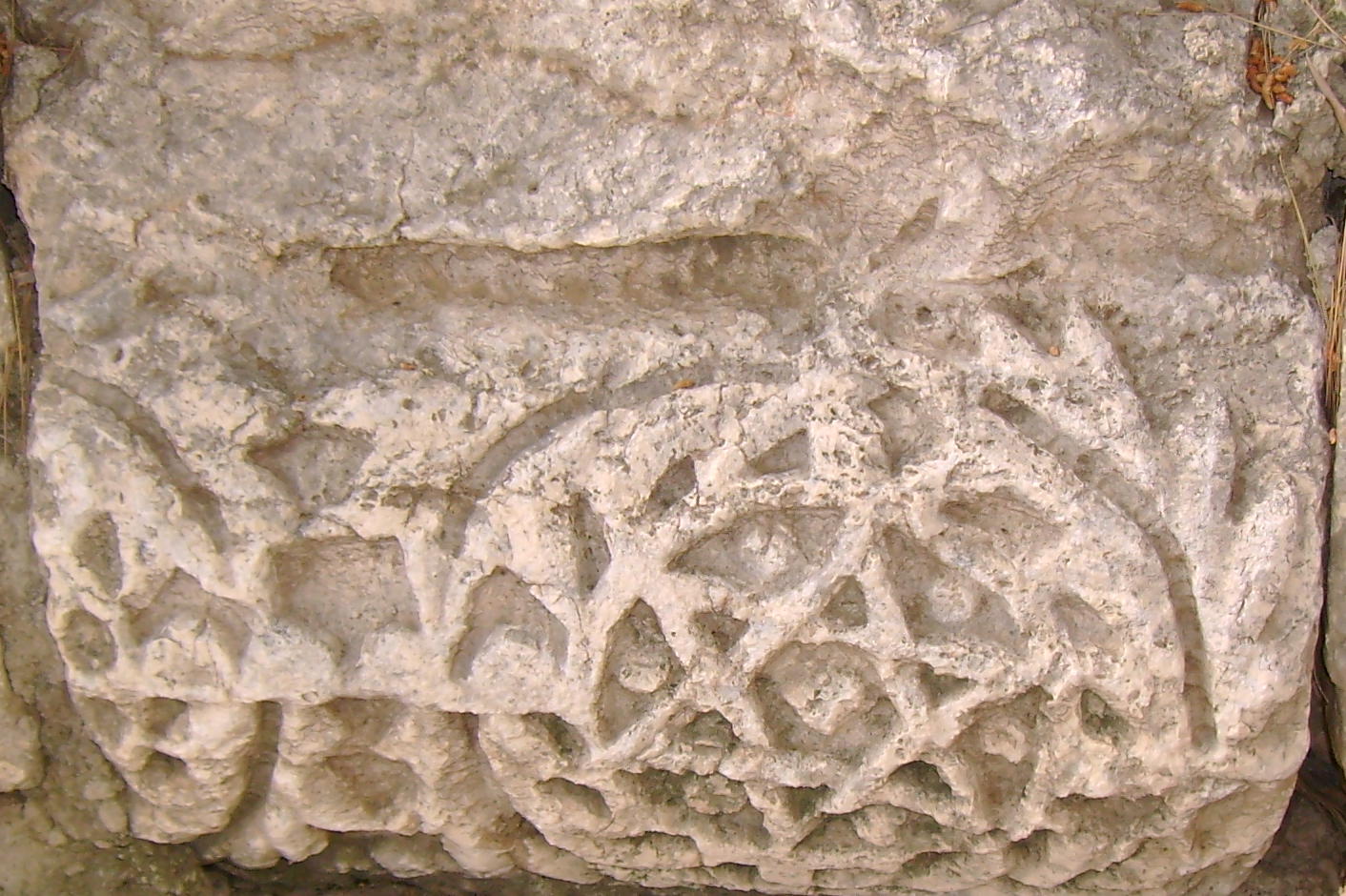
Capernaum Rock

An “expert” at the site insisted that this stone bears the marks of a 1st century Jewish stone carver.  “But,” I asked him, “as a scientist are you not bound by the strictures of methodological naturalism?  Your explanation for the markings is a classic example of the ‘stone carver of the gaps’ fallacy, and you should be ashamed of yourself.  The methods of science demand that we favor a naturalistic explanation for the markings on this stone, and it seems to me that ‘weathering’ is the best hypothesis.  Indeed, it is the only reasonable hypothesis unless we are willing to let the IDiots get a foot in the door.” 

  • Delicious
  • Facebook
  • Reddit
  • StumbleUpon
  • Twitter
  • RSS Feed

40 Responses to Stone Carver of the Gaps

  1. Human bodies are natural entities, but human minds are not naturalistic causes. Minds cannot be observed at all; they’re causal efficacy must be inferred from the effects they produce. This is true with all minds other than your own–even other humans.

    Ever seen an fMRI machine? To say that we have not reduced human minds completely to natural causes does not mean that there is any reason to suspect that there are supernatural causes involved. Why not say the same for non-humans? Computers? You also cannot prove that they don’t have non-material components to them, why not assume that they do as well?

    And boy do these people have a story to tell!…(OK,OK, some of these guys are dead, but hey, some are still alive)….materialistic ideology, however, turns a blind eye like always, refusing to investigate whether an extraneous intelligence was indeed involved in the lives of these extraordinary people.

    But that’s just it, you can’t know whether or not there was a supernatural intelligence making things happen in their lives. Private religious experience doesn’t count because it is not objective. Wouldn’t you agree with the statement that muslims, hindus, etc, are not experiencing genuine supernatural involvement when they have their own religious experiences? I’m not saying they’re not extraordinary, but its not objective evidence that we can use.

    Thanks, ChristopherSaint for the defense on my response.

    I agree with Sladjo in part – if you define “supernatural” entities as being really “natural” but currently unobservable, there’s no violation of methodological naturalism involved in talking about God. But, IMHO, you need evidence of that phenomenon before you can follow the evidence where it leads.

    StephenB:

    You misunderstand the methodology. A design inference can detect design but it cannot detect the identity of the designer.

    I don’t think that you can separate the design detection from the designer. Knowledge of the capabilities (and limitations especially, thanks DaveScot) help you determine what kind of designer(s) you are dealing with. How else can we make claims of Intelligent Design? The very name implies that there is specific evidence of some level of intelligence, which is a characteristic of the designer(s) after all.

  2. —–”I don’t think that you can separate the design detection from the designer. Knowledge of the capabilities (and limitations especially, thanks DaveScot) help you determine what kind of designer(s) you are dealing with. How else can we make claims of Intelligent Design? The very name implies that there is specific evidence of some level of intelligence, which is a characteristic of the designer(s) after all.”

    The only characteristics that can be discered are those of intelligence and the capacity to plan, organize, and code information. That has nothing to do with the “identity” of the designer.

  3. 33

    Methodological naturalism is committed to the proposition anything that appears to be designed cannot really be designed. All organisms, or artifacts, one gathers, must be the result of natural causes, which by definition, rules out intelligent causes. In that sense, it must rule out all design in principle. How can it not? Inasmuch as it can’t be certain that the design is not from supernatural agent, it can’t take the chance. It must declare all design as illusory, human, superhuman, or divine. Once you admit design at any level, methodological naturalism would seem to be out of business.

    I am new around here and don’t have a good feel for the personalities, but I hope you are engaging in hyperbole. Because this is one of the most extreme caricatures I have ever seen. Please tell me you are being sarcastic, because I have never seen any committed materialist ever make such an argument.

  4. —–”I am new around here and don’t have a good feel for the personalities, but I hope you are engaging in hyperbole. Because this is one of the most extreme caricatures I have ever seen. Please tell me you are being sarcastic, because I have never seen any committed materialist ever make such an argument.”

    Yes, I am pushing the envelope a little bit, but not much. You are right that no naturalist argues in exactly that way, but that is what their argument amounts to. They escape the implications of their argument by mangling the definitions of terms. I have argued, for example, that it is fairly easy to detect design in an ancient hunter’s spear–that the finished form did not occur through natural means. Materialists have often countered by saying that it was indeed the result of “natural processes” because, for them, it occurred “in nature.” According to them, “outside of nature” means supernatural, while “inside of nature” means natural. So, for them, the construction of the spear is a natural process because it occurred “in nature.”

    This is irrational, because intelligence, the source of design, is not a “natural” explanation. There are only three known explanations for any artifact or any organism: Law, Chance, or Intelligent agency. If something occurred as a result of “natural processes,” that means that either law or chance is responsible. If it is designed, that means that an intelligent agency is responsible. Materialists use the term “natural intelligence,” which is, by definition, an oxymoron.

    If natural means, “in nature,” then, under the circumstances, it would be impossible to isolate intelligence from law and chance (nature), because intelligence would also be part of the definition of nature. So, each time the ID scientist infers design, after having eliminated law and chance as possible explanations, the materialist simply changes the definition of natural to include intelligence and natural processes. Then, when the ID scientist explains that the event could not have occurred as a result of natural processes, the materialist then accuses him of appealing to “supernatural explanations.” Unfortunately, some of our people will play that game and argue with them on those terms. I will not. To frame the issue this way is to wallow in intellectual quicksand.

  5. For the nth time, I want to strongly affirm that the words “nature” and “natural” are very tricky, and refer to ill defined concepts. It would be better either not to use them (my usual choice) or to define in detail the context and meaning one is choosing. That’s why most discussions about “methodological naturalism” are deeply flawed at the start.

    The fact is that defining one of the possible meanings for the word and concept of “nature”, implies making certain definite philosophical assumptions, which are in no way neutral or universally accepted.

    Just a very simple example: we have repeatedly debated that we can observe, in “nature”, three kinds of agencies which can “explain” various information patterns: necessity, chance, and design. That’s one of the basics of ID.

    And that’s where materialists immediately exhibit their flawed reasonings about “methodological naturalism”: science is committed, for some “implicit” (and unexplained) reason, to “natural” explanations. Therefore, design is either not admitted, or admitted only if it comes from a “natural” designer (usually intended as humans, but maybe aliens can apply).

    But again, what is “natural”?. For a materialist, I suppose, only matter is “natural”. But the concept itself of “matter” is rather problematic, and abstract. Are mathemathical objects “natural”? Are minds “natural”? What are mathemathical objects? What are minds? What is consciousness?

    Those are not small questions, and any definition of “nature” will be heavily biased according to the position (or non position) one chooses about them.

    For instance, I could argue (and indeed I do believe) that consciousness is in itself a manifestation of a transcendental enity (the transcendental “subject”, the soul, or anyway you like to call it), and that it cannot be explained, in any way, at the level of “matter” or of current scientific concepts. That would definitely put even human design beyond the reach of a strict materialistic definition of “nature”.

    On the other hand, I could argue (and indeed I do believe) that any agent who can produce effects in the world of matter is implicitly “natural”, even if its nature be transcendental or transcendent. That would put inside the concept of “natural agents” both humans and God, even if their intrinsic “nature” can well be “supernatural”.

    All the above is not intended to force my perspective on anybody, but just to show that one cannot reliably use concepts like “nature”, “natural” and “naturalism” (be it methodological or not) without making heavy philosophical assumptions, which others are not necessarily obliged to share. In other words, anybody who sticks to strict and reductive definitions of science, like methodological naturalism, is already moving in the sphere of subjective philosophy, or rather of personal faith.

  6. A few things this thread has made me wonder

    a) If minds and brains are seperate how come we’ve only ever encountered minds where brains are?

    b) Are there any examples of minds without brains?

    c) If minds and brains are seperate why does damaging the brain cause damage to the mind?

    d) If there is an afterlife, then does the mind of a 95 year old that has been damaged by the aging process (or alzheimer’s etc) get restored to a previous version? Infininty in paradise does not sound like fun if you are a drooling loon.

    crandaddy

    Minds cannot be observed at all; they’re causal efficacy must be inferred from the effects they produce.

    It seems to me you could scratch out “minds” and replace it with “brains” and loose nothing (apart from the inabiligy to not observe minds). Occams razor appears to agree.

    crandaddy and others, out of interest, do you think that “ghosts” are really minds without bodys?

    Salvador, if you are reading this have you had any thoughts about expanding on the NIH issue? My contacts are champing at the bit ready to get started on this serious issue..

  7. Megan.Alavi:

    I understand this is a blog, and anybody can say or ask anything, but don’t you think you are asking some pretty fundamental questions with remarkable naivety? Are you aware that your questions have been addressed for centuries (and still are) by phiolsophers, scientists, or simply laymen of all cultures? Or do you believe that modern “science” has easy answers to all of them?

    In order:

    1) “If minds and brains are seperate how come we’ve only ever encountered minds where brains are?”

    First of all, nobody is sayng that minds and brains are “separate”. They are obviously connected.

    I think what you mean is that, in your opinion, brains exist and minds don’t, or at least that what we call “mind” is only an effect of the brain.

    First of all, let’s distinguish the word “mind” from the word “consciousness”. I have to remark, not for the first time, that everybody seems to forget very easily that our personal consciousness is the first data of knowledge available to each of us, and that any other form of knoledge happens in consciousness. The very simple consequence is that our degree of certainty in knowledge is as follows:

    a) Our personal consciousness: we are absolutely certain that it exists, because we perceive it directly, intuitively.

    b) The external world (including our bodies), as perceived through the senses, that is through our personal consciousness. Its existence is a very reasonable inference from the data in our consciousness.

    c) Consciousness in other beings in the external world, especially humans. Another very reasonable inference, based on our personal experience of consciousness plus the observed similarity between our bodies and behaviour and other humans’ bodies and behaviour.

    d) Logical and mathemathical processes and principles in our consciousness, which seem to have a strange, and as yet unexplained, power to “explain” what happens in the external world.

    e) A series of inferences made by our consciousness about the external world and its “laws”, inferences made possible by the application of the above logical and mathemathical objects to sensory experience.

    Point e) is what, in essence, represents both philosophy and science. The certainty of the inferences under point e) is never absolute, but it can be reasonably shared under certain conditions.

    The assumption which you are trying to make, that the brain (an observable, and very complex, object) is the “origin”, and the causal explanation, of consciousness, is a very flawed assumption, although materialistic science takes it for granted. There is no evidence to support it, no reasonable causal theory to give it at least a scientific credibility, no good philosophical background behind it. There is no plausible model that can explain how a physical object (the brain) can give rise to consciousness by means of its structure and/or complexity. For a detailed discussion of the many scientific aspects of this question, please read “The spiritual brain”, by Mario Beauregard and Denyse O’Leary. Then we can start discussing.

    2) “Are there any examples of minds without brains?”

    There are probably a lot, starting from God to human minds after death, but as they are not perceived by the senses, we cannot argue scientifically about them, at least not at present.

    3) 3) “If minds and brains are seperate why does damaging the brain cause damage to the mind?”

    Because they are not separate. They are connected. Damage to the brain causes “damage” to the mind because the brain is the instrument of expression of the mind during human life. In the same way, if your PC is damaged, your capacity to work thorough it is damaged too, but that does not mean that you are only a byproduct of your PC.

    4) “If there is an afterlife, then does the mind of a 95 year old that has been damaged by the aging process (or alzheimer’s etc) get restored to a previous version? Infininty in paradise does not sound like fun if you are a drooling loon”

    Here, really, I pass. I won’t engage with you in a discussion about the afterlife and its possible models. Please, read something from the immense lot of thoughts in human heritage about that.

  8. a) If minds and brains are seperate how come we’ve only ever encountered minds where brains are?

    Because, as non-physical entities, minds don’t have feet to allow them to walk away from the brain. ;)

  9. There is no plausible model that can explain how a physical object (the brain) can give rise to consciousness by means of its structure and/or complexity.

    a) Plausible to who? You? There are plenty of people researching this exact issue. Just because no “plausible” model has been proposed does not mean that the alternative theory automatically is assumed to be correct. Is ID working on a model to bring to the table?

    For a detailed discussion of the many scientific aspects of this question, please read “The spiritual brain”, by Mario Beauregard and Denyse O’Leary.

    Are you saing that book contains a plausable model for the non-material formation of the mind? From what I’ve read about it, that’s not it’s intent.

    as they are not perceived by the senses, we cannot argue scientifically about them, at least not at present.

    I’ve always wondered what tools are used to investigate the non-material realm. Now I believe I know.

    In the same way, if your PC is damaged, your capacity to work thorough it is damaged too, but that does not mean that you are only a byproduct of your PC.

    If I damage my PC I can just reinstall the OS, put the backup on and continue on.

    My point is that why not also presume a lind exists? A lind is to a mind as a mind is to a brain. There is no evidence for it, just as there is no evidence for a mind seperate from the brain. And as they are not perceived by the senses, we cannot argue scientifically about them, at least not at present. And yet there is as much evidence for a lind as a mind, it appears to me.

  10. Megan.Alavi

    “Plausible to who? You? There are plenty of people researching this exact issue.”

    Yes, I meant to me. It was me who was writing. I assume the responsibility of what I say.
    The most recent model I am aware of if Hofstadter’s theory of the “loop”, and definitely it’s all but plausible to me.
    I am perfectly aware that there are plenty of people “researching” that. They will probably go on “researching” for a long time. The “hard” problem of consciousness is that there is no way to explain consciousness with the kind of theories that people are “researching”. Consciousness is a fact, if ever one existed. And no plausible theory exists to relate that supreme fact to what we know of the more “indirect” facts about material objects and brains.

    “Are you saing that book contains a plausable model for the non-material formation of the mind? From what I’ve read about it, that’s not it’s intent.”

    I am saying that that book contains very useful information and perspective about the scientific questions pertaining to the brain and the origin of consciousness, information and perspective which you could certainly use.

    “I’ve always wondered what tools are used to investigate the non-material realm. Now I believe I know.”

    I don’t think you know, and this is not the place to discuss such things. But again, if you are interested in a religious perspective, you can certainly choose one of the many available. Otherwise, you could just be aware that they exist.

    “If I damage my PC I can just reinstall the OS, put the backup on and continue on.”

    And so? May be we will soon be able to repair brains (for instance, by stem cells), and then the consciousness and mind would continue on. Your assumption that, if the brain is damaged, the consciousness and mind (I insist, they are nor necessarily the same thing) are irreversibly damaged too, is just that: an assumption, faith based.

    “My point is that why not also presume a lind exists? A lind is to a mind as a mind is to a brain.”

    Perhaps I have not made myself clear enough: consciousness exists because we perceive it (our personal consciousness, I mean). It is a fact. We have to try to explain that fact. Consciousness pre-exists the brain in our experirence. We perceive the brain as a material object “through” our consciousness. I don’t think, frankly, that your “lind” has the same status.

    Moreover, mental events, like thoughts, feelings, mental representations, and so on, certainly exist. They are directly perceived through consciousness, and without the intermediary of the senses. They are facts, too, and their “supposed origin” from the brain has to be explained and proved. Science cannot do that. Science can only investigate the relation between some physical activities and modifications of the brain and the corresponding modifications in the mind. Again, a relation certainly exists, and we did not need modern science to know that. The power itself to perceive and act through the body is evidence enough of a strong relation between the body and the mind. Philosophers, as well as laymen, have known that for millennia. Modern science has not added anything to the question, except for many very interesting details on the functioning of the body part of the relation.

    So, you are free to assume that the relation between body and mind means that only the body really exists, like (few) philosophers have believed through the centuries, and I am free to assume that instead it means that a non material principle is expressing itself through the body, like (most) philosophers have believed through the centuries. The fact is that modern science has not added anything substantial to the debate, as you seem to believe.

Leave a Reply